Organizing a wedding involves making dozens of decisions in just a few months. Some are visible (the dress, the venue, the menu), while others fly under the radar until the big day. It is often these latter details that determine whether the day unfolds smoothly or in stress. Here are the concrete aspects to anticipate for a successful wedding, beyond the usual advice on decoration and theme.
Administrative Constraints of the Civil Ceremony at the Town Hall
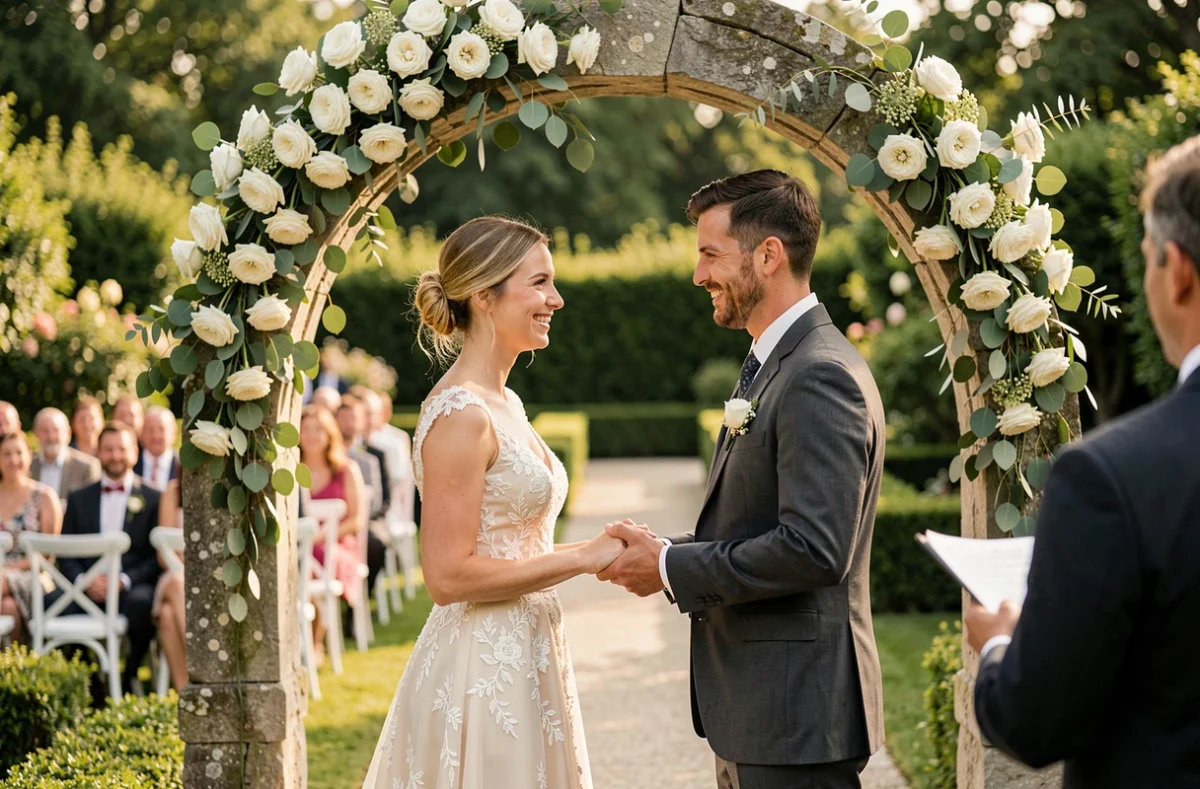
You may have a clear image of your ceremony in mind: music at the entrance, exchange of rings, speeches from the witnesses. In practice, everything that happens at the town hall follows a specific framework. The civil marriage must be celebrated in a room open to the public, and celebrating in another municipal building requires a formal decision from the municipality.
The elements often presented as necessary (music, speeches, entrance of the couple) are actually based on customs. Each town hall sets its own rules. Some allow a piece of music between readings, while others refuse any additions to the official proceedings. The reflex to adopt: contact the town hall several months before the date to know precisely what is allowed.
A platform like tomymariage.fr helps structure these preparations and maintain an overview of the steps, including administrative ones, that couples often overlook in favor of decoration.
Disconnected Wedding: Photographer and Coverage Without Smartphones
The trend of phone-free ceremonies is gaining ground. The principle: ask guests to put away their devices during the ceremony to preserve collective attention. The idea is appealing, but it has a direct consequence on your organization.
If no one in the assembly takes photos, the couple relies entirely on the photographer and videographer. It’s no longer just about booking a provider, but about defining in advance the moments to cover and the expected deliverables: number of retouched photos, length of the film, delivery time.
Why does this point change the game? Because a traditional wedding generates hundreds of photos taken by guests. By removing this source, you lose the spontaneity of amateur shots. Your photographer must then adapt their coverage to capture informal moments as well, not just the official poses.
- Specify in writing the key moments to be photographed (preparations, ceremony, cocktail, dancing).
- Request a second photographer if your guest list exceeds a hundred, to simultaneously cover multiple spaces.
- Set in the contract the minimum number of delivered shots and the format (digital, album, online gallery).
Consent and Personal Data of Guests
Are you considering a photo-sharing app so that everyone can find the wedding pictures? The idea is practical. It also raises an issue that few couples anticipate: collecting personal data from guests requires their consent.
When a wedding app collects photos, videos, or information about your guests, you must check several points before deploying it:
- Guests must be able to refuse data collection without feeling excluded from the celebration.
- The procedures for deleting data after the event must be clear and accessible.
- The couple remains responsible for the choice of the tool and its settings, even if they do not technically manage the platform.
This topic may seem secondary compared to choosing the caterer or the wedding dress. It is not. An uncomfortable guest regarding the use of their image can create an embarrassing situation if no alternative has been planned.

Weather Risk Management for an Outdoor Reception
Organizing the reception outdoors remains a popular choice. The trap is to consider the backup plan as a detail. A weather backup plan should be prepared with as much care as the main plan.
In practical terms, planning a tent or marquee is not enough. You need to check that the reception venue allows the installation of temporary structures, that the ground can support the setup (sloped terrain, muddy ground after rain), and that the providers (caterer, musicians, florist) can switch from one space to another without needing to reorganize everything.
The real decision lies in the budget. Booking a covered space “just in case” represents a significant additional cost. Some reception venues include this option in their offer, while others charge separately for it. Ask the question during the first visit, not two weeks before the ceremony.
Choosing Wedding Vendors: Questions No One Asks
Most guides advise comparing quotes and checking online reviews. That’s a good start, but that’s not where the quality of service on the big day is determined.
Before signing with a caterer, DJ, or florist, ask operational questions. Inquire how the provider handles an unexpected event on the day itself: delivery delays, equipment failure, absence of a team member. The answer reveals more than a portfolio of photos.
Also, check the compatibility between providers. A DJ who needs three hours to set up in a venue where the caterer is setting the tables at the same time is a predictable logistical conflict. Ask each provider about their time and space constraints, then cross-check the schedules before the big day.
A final often overlooked point: the contract. Review the cancellation, postponement, and replacement clauses. A provider who does not have any replacement solutions in case of an impediment leaves you without a safety net just days before the ceremony.
The success of a wedding rarely hinges on a single spectacular detail. It relies on the accumulation of well-made decisions in advance, those that avoid tensions on the big day and allow the couple to enjoy their guests.