
A light bulb burns out in the living room ceiling fixture. The first instinct is to buy a replacement, but in a furnished rental, the same question often comes up: is the tenant responsible, or does the landlord have to step in?
The answer is set out in one line of Decree No. 87-712 of August 26, 1987, which classifies replacing light bulbs and fluorescent tubes as tenant repairs. The tenant pays for and replaces them. But this rule has its limits, and that’s where things get interesting.
Light bulbs burning out repeatedly: consumable or faulty installation?
Replacing a bulb at the end of its life is routine maintenance. Replacing a third new bulb in two months in the same fixture is another matter. The distinction is central to how responsibilities are divided.
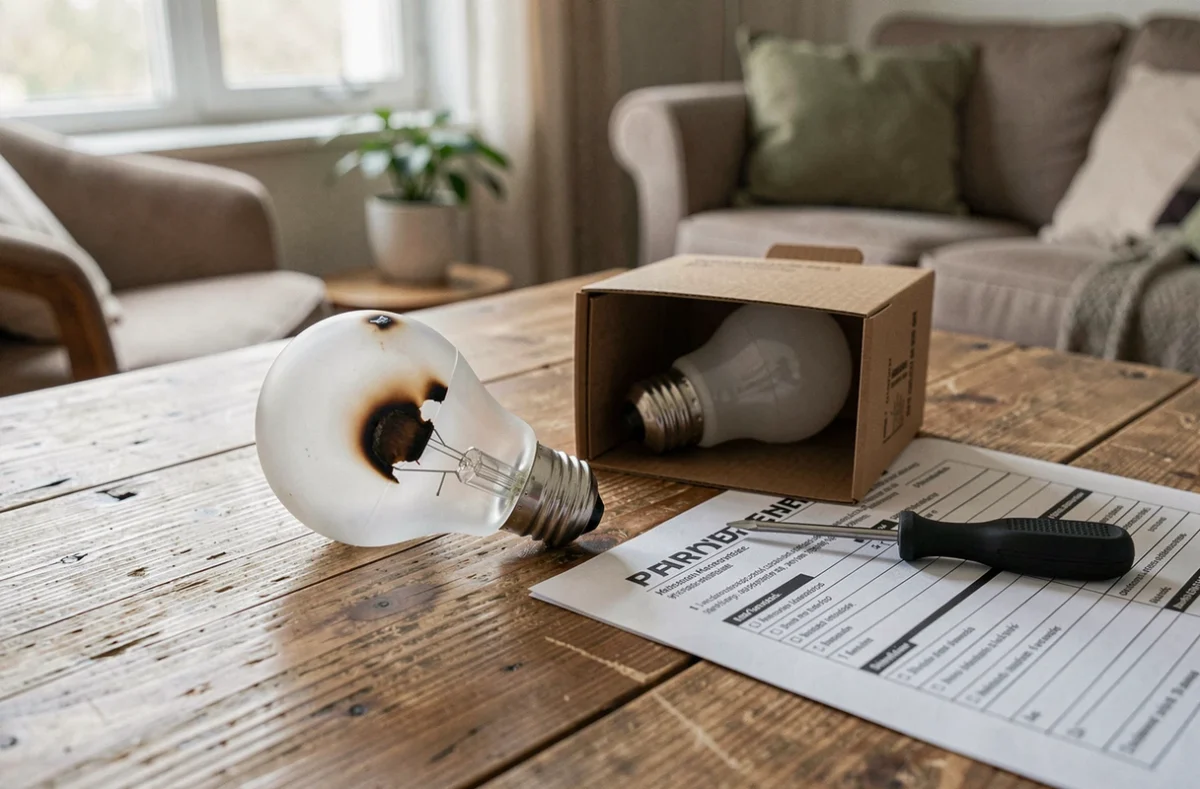
When a new bulb blows shortly after being installed, the problem is no longer the consumable. It could be a faulty socket, a loose connection in the fixture, or a power surge caused by the property’s electrical installation. Worn-out consumables are the tenant’s responsibility; faulty equipment is the landlord’s.
The law explicitly provides for this. Article 7 of the Law of July 6, 1989 makes the tenant responsible for routine maintenance and minor repairs, but excludes those caused by wear and tear, a construction defect, or faulty workmanship. If a light fixture supplied with the furnished rental keeps causing outages, the landlord must have the fixture or installation inspected.
What the tenant should do: note the replacement dates, keep the packaging from new bulbs, and report the problem to the landlord in writing. This letter (or email with acknowledgment of receipt) turns a daily annoyance into a formal repair request.

Furnished rentals and replacing light bulbs: what the law says
Wondering who is responsible for changing a light bulb, the tenant or the landlord in a furnished rental? Decree No. 87-712 of August 26, 1987 lists tenant repairs. Its appendix, under Section V on electrical equipment, includes replacing light bulbs, fluorescent tubes, switches, power outlets, circuit breakers, and fuses.
The furnished status of the property does not create a special rule for light bulbs. As long as the furnished rental is the tenant’s primary residence, the Law of July 6, 1989 applies. The tenant is responsible for routine maintenance, while the landlord takes care of major repairs and ensuring the installation complies with regulations.
One point that is often overlooked: the list of tenant repairs (Decree No. 87-712) and the list of recoverable charges (Decree No. 87-713) are two separate texts. The latter may refer to light bulbs for shared equipment or common areas. Don’t confuse replacing a bulb in your home with a building charge.
What the tenant replaces themselves
- Light bulbs, fluorescent tubes, and LEDs in all the property’s fixtures, including hard-to-reach ceiling lights
- Fuses in the secondary electrical panel, switches, and power outlets damaged through normal use
- Fluorescent tube starters, which are consumables just like light bulbs
What the landlord is responsible for
- Replacing or repairing a faulty light fixture supplied with the furnished rental (cracked socket, damaged cable, broken base)
- Making the electrical installation safe or renovating it if it is outdated or non-compliant
- Replacing the main electrical panel and structural wiring
Move-in inspection: the moment that can make all the difference
If a bulb is already burned out on the day the keys are handed over, the tenant is not responsible for replacing it. The landlord must provide the property and its equipment in good working order. This is a legal obligation, not a favor.
The move-in inspection is specifically intended to document the initial condition of the property. Testing every bulb and switch during this inventory takes just a few minutes. Note any faulty fixtures on the report, with a precise description (“kitchen ceiling light: bulb burned out,” “bedside lamp in bedroom: does not turn on”).
This thoroughness protects both the tenant and the landlord. At move-out, a comparison of the inspection reports makes it possible to distinguish what was already out of order from what deteriorated during the tenancy. Without this record, it becomes one person’s word against the other’s.
Can the landlord deduct the cost of light bulbs from the security deposit?
Can a landlord deduct money from the security deposit because light bulbs are burned out when the tenant moves out? In theory, yes, if the move-out inspection records missing or non-working bulbs that were working at move-in. In practice, there are several safeguards.
The law prohibits landlords from setting the amount of a deduction based solely on their own estimate. Any lease clause allowing reimbursement for tenant repairs based only on the landlord’s unilateral assessment is deemed unwritten. Supporting documents are required: a receipt for the bulbs, or a quote if an electrician is called in.
The amount is modest for a few bulbs. The real risk of a dispute arises when the landlord adds the cost of replacing an entire fixture on the grounds that “the bulbs burned out.” If the fixture was already worn out or faulty, the cost cannot be charged to the tenant.
Repeated electrical failures in a rental: when to notify the landlord
Not all electrical failures are the same. A fuse blowing once after too many appliances are plugged into a power strip is a one-off incident. A circuit breaker that trips regularly or bulbs burning out in several fixtures points to a problem with the electrical installation.
The tenant is neither required nor permitted to work on the main electrical panel or concealed wiring. Their responsibility is limited to consumables and small, visible fixtures. Beyond that, the landlord must hire a qualified electrician to diagnose the cause of the problem.
Reporting the issue in writing is the best protection. A registered letter or dated email describing the symptoms (bulbs burning out repeatedly, outlets getting hot, a burning smell) reminds the landlord of their obligation to keep the installation in good condition. If there is no response, the tenant can refer the matter to the departmental conciliation commission before considering legal action.
The line between routine maintenance and a structural defect may seem unclear, but the test is the same: if simply replacing the bulb solves the problem, it is the tenant’s responsibility. If the problem continues after replacement, responsibility shifts to the landlord.