When people talk about French actresses over 50, online articles often focus on their appearance or biographical background. The real question lies elsewhere: what kinds of roles are they being offered today, and do they actually have the power to choose their projects? From Juliette Binoche to Karin Viard, these actresses are doing more than simply staying visible. They are making artistic choices that are reshaping the place of mature women on screen.
Leading roles, supporting roles or extras: what casting reveals about actresses over 50
Have you noticed that in many recent French films, women over 50 play the mother, the stepmother or the neighbor? This is a documented trend. Looking at films released in recent years, most of the roles offered to actresses in this age group are still supporting parts.
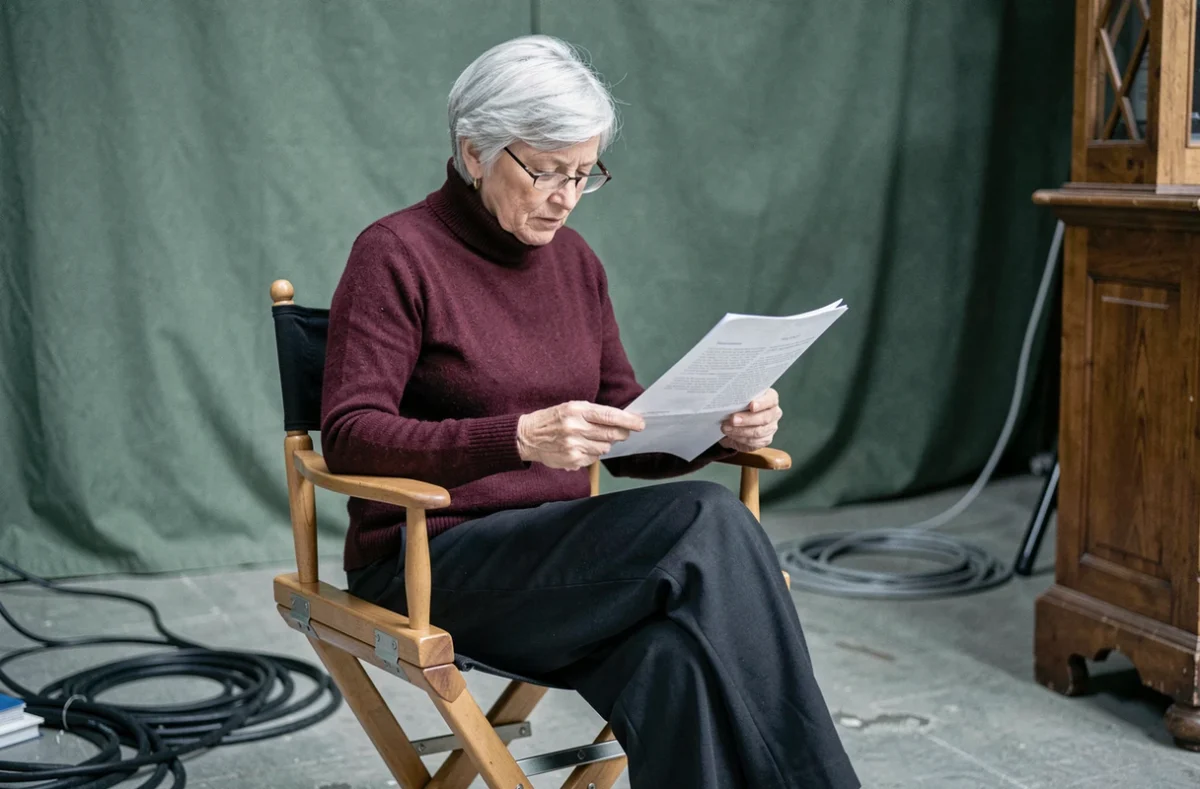
A recent example illustrates this dynamic well. In Ni vue ni connue, Isabelle Huppert plays an extra trying to make a place for herself on a film set, while Sandrine Kiberlain plays the film’s star. With humor, this storytelling choice highlights the hierarchies between actresses and the question of visibility in cinema. The film deliberately draws on what actresses experience in real life: their gradual relegation to peripheral roles.
When a French actress over 50 lands a leading role, it is no accident. It is almost always the result of a long-standing collaboration with a director, or a project spearheaded by the actress herself.
French actresses and international cinema: careers without borders
Some French actresses have sidestepped the limits of the domestic market by working abroad. Juliette Binoche’s career is a case in point. Her filmography includes big-budget international productions such as Godzilla and Ghost in the Shell, as well as comedies and art-house films shot in several languages.
This back-and-forth between art-house cinema and blockbusters is no small matter. It gives these actresses bargaining power. When a French producer knows an actress can work in English on a Hollywood-scale production, they think twice before offering her an extra role.
Others have followed a different but equally strategic path. Karin Viard, now approaching 60, moves between popular comedies and challenging dramas. This ability to shift from one genre to another without losing credibility has become a hallmark of longevity.
Choosing projects rather than simply accepting them
The question of how much real choice actresses have is central. An actress who receives one offer after another is not necessarily free to make her own artistic decisions. Freedom comes when she can turn down a role without fearing she will stop getting calls.
Several signs suggest that some experienced actresses have reached this point:
- They get involved in developing scripts early on, sometimes as co-producers, to ensure the female character is not merely there to support someone else.
- They take on projects about difficult or less commercial subjects, showing that they do not rely solely on box-office success to sustain their careers.
- They work with emerging directors, not just established names, giving them access to roles written differently.
Ariane Ascaride, for example, continues to work with Robert Guédiguian on films that tackle social realities without compromise. This kind of artistic loyalty reflects a deliberate choice, not a lack of alternatives.
How women over 50 are represented in French cinema: what has changed and what remains
The landscape has evolved, but not evenly. Television series have opened up new opportunities. Complex roles for mature women appear more regularly on television than on the big screen, because the longer format allows a character to develop beyond an archetype.
The picture in cinema remains mixed. Comedies still confine actresses over 50 to stereotypical characters (the overbearing mother, the bitter ex-wife). Art-house dramas give them more substance, but reach a smaller audience.
Age as a subject, not a limitation
What sets apart the actresses who are “still shining” is often their ability to turn the constraint of age into narrative material. Age becomes a film subject, not a casting obstacle.
Huppert’s character in Ni vue ni connue is the clearest example: the film is specifically about what it means to grow older in an industry obsessed with youth. When an actress takes on this kind of role, she is not simply at the mercy of the system. She is commenting on it from the inside.
Upcoming projects from several of these actresses confirm this trend. Films in development tackle more challenging subjects, telling stories about women facing life transitions rarely shown on screen. These choices are not compromises. They reflect a desire to explore narrative territory that French cinema has tended to avoid.
Actresses over 50: beyond a list of names
Listing famous actresses is not enough to understand what is at stake. The true measure of their influence lies as much in the roles they turn down as in those they accept.
An actress who appears in a challenging art-house film, then a mainstream comedy, then an international production is not just filling her schedule. She is building a filmography of her own. It is this range, not simply longevity, that sets apart the most remarkable careers in French cinema today.
French cinema has a pool of experienced actresses matched by few other industries. The question is no longer whether they can still shine. It is whether producers and screenwriters will write characters worthy of their talent.