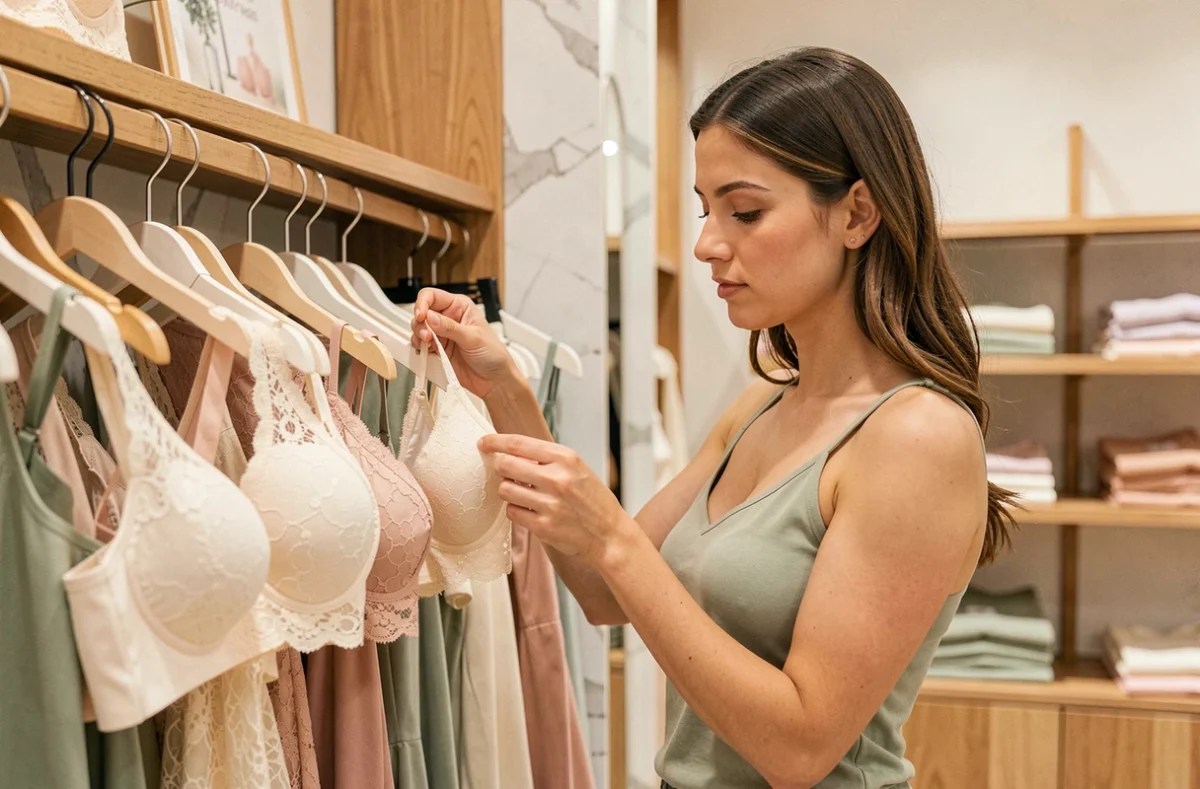
The women’s lingerie market is undergoing a period of restructuring. With the introduction of new regulatory constraints on the environmental display of textiles and the evolution of expectations regarding comfort and body shape, choosing lingerie is no longer just a matter of style. The selection criteria have expanded, and some benchmarks are changing.
Textile Environmental Display: What Changes for Lingerie in 2026
Since October 1, 2026, the Ecobalyse tool allows anyone (consumer, association, distributor, competitor) to calculate and publish the environmental cost of a garment, even if the brand has not provided this score itself. The indicator aggregates the effects on climate, water, biodiversity, recycling, repair, and microfibers released during washing.
For lingerie, this evolution has a direct consequence. Brands that use claims like “responsible,” “sustainable,” or “eco-friendly” without verifiable data are subject to the obligation to display the official environmental cost, calculated according to the Ecobalyse method. Vague mentions become harder to maintain without proof.
In practical terms, when choosing lingerie, it becomes possible to compare pieces based on a standardized indicator. A synthetic lace bra and a model made of organic cotton do not display the same score, and this difference is now calculable by a third party. Among the catalogs available online, lingeriefeminine.be offers a range of models that showcases the diversity of materials and manufacturing available in the Belgian and European markets.
Body Shape and Support: The Technical Criteria That Guide Choice
The issue of support remains the primary factor of satisfaction or dissatisfaction. A poorly fitting bra can cause back pain, shoulder marks, or daily discomfort. Field reports vary on this point: some women prioritize firm support, while others seek a feeling of lightness, and the two expectations cannot be satisfied with the same constructions.
The Shapes of Cups and Their Support Logic
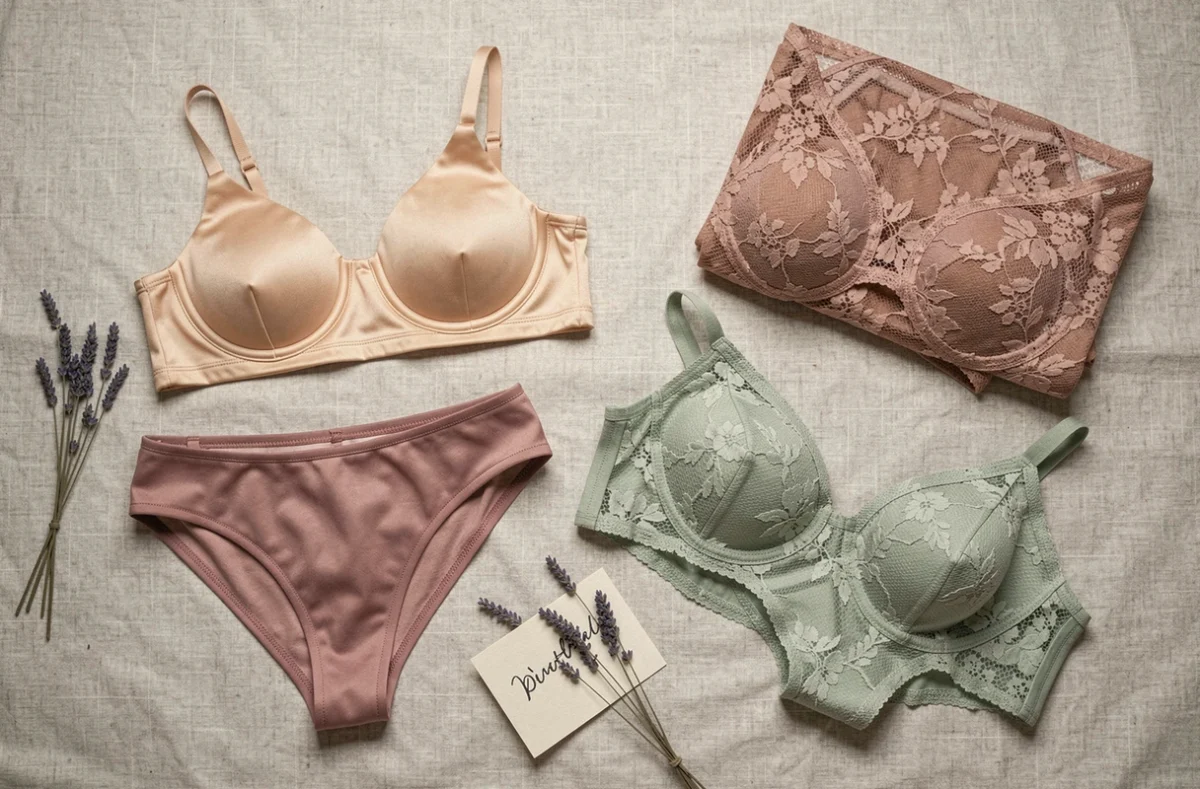
The choice between a triangle, full cup, or balconette model is not solely aesthetic. Each shape corresponds to a different support architecture.
- The wireless triangle is suitable for breasts that do not require marked structural support. It offers maximum comfort but limited support during movement.
- The full cup encompasses the breast more and distributes the weight over a larger surface, making it suitable for average to generous busts.
- The balconette lifts the upper part of the breast and provides lateral support. It works well under low necklines but requires a perfectly fitted size to prevent spillage.
The choice of shape also depends on the clothing worn over it. Under a fitted dress, a seamless smoothing model avoids visible lines. Under a flowy top, a triangle or bralette is usually sufficient.
Size: Why Standard Measurements Are Not Always Enough
Size systems vary from one brand to another. An 85B from a French manufacturer does not necessarily correspond to the same volume from a Belgian or Italian manufacturer. The difference between two brands can reach half a cup size for the same band size.
The available data does not allow us to conclude that one sizing system is more reliable than another. The only method that consistently works is to measure the bust and chest circumference with a flexible measuring tape, then consult the size guide specific to each brand before purchasing.
Lace, Microfiber, Cotton: How Material Affects Daily Life
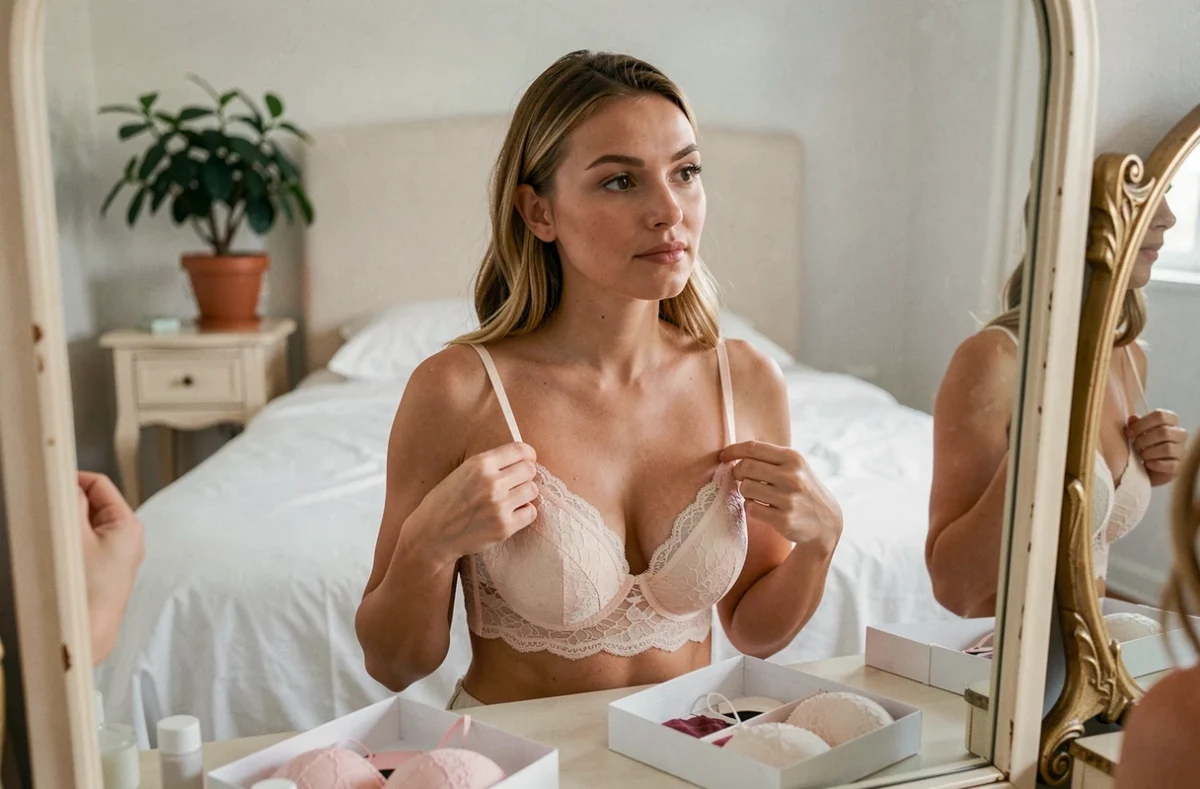
The material of a piece of underwear determines its durability, thermal comfort, and maintenance. These three parameters directly influence long-term satisfaction.
Lace remains associated with high-end lingerie and pieces worn for specific occasions. In contrast, the mechanical laces used in everyday lingerie do not have the same longevity as Calais or Caudry lace. The origin and type of lace radically change its durability over time.
Microfiber (polyamide, elastane) dominates the daily comfort segment. It dries quickly, hugs the silhouette, and remains invisible under fitted clothing. Its main drawback concerns the plastic microfibers released during washing, a criterion now taken into account in the Ecobalyse calculation.
Cotton, often preferred for its breathability, raises questions about its cultivation (conventional or organic) and treatment. Untreated cotton is better suited for sensitive skin, but labels do not always indicate the level of treatment the fiber has undergone.
Lingerie Trends and Silhouette: What Recent Collections Reveal
Recent collections show a shift of lingerie towards visible clothing. Bodysuits, bralettes, and nightgowns are worn as visible pieces, integrated into daytime outfits. This phenomenon modifies the selection criteria: color, line, and exterior finish count as much as support.
Red and deep hues are gaining ground against black and nude. Geometric cuts are gradually replacing classic rounded shapes in certain market segments.
- Wide band bralettes are worn under an open jacket or a sheer blouse.
- High-neck bodysuits function as full tops, tucked into high-waisted pants.
- Satin or crepe nightgowns are layered over jeans or a midi skirt for a bold daytime look.
The choice of a lingerie piece now also depends on its external clothing use. This trend encourages brands to focus on visible finishes (flat seams, decorative straps, contrasting lace inserts) as much as on internal structure.
The women’s lingerie market is at a turning point between strengthened environmental regulation, diversification of body shapes considered by brands, and blurring the lines between underwear and outerwear. Comparing materials, checking size brand by brand, and consulting environmental indicators are three reflexes that allow for more informed purchasing, regardless of the targeted price range.