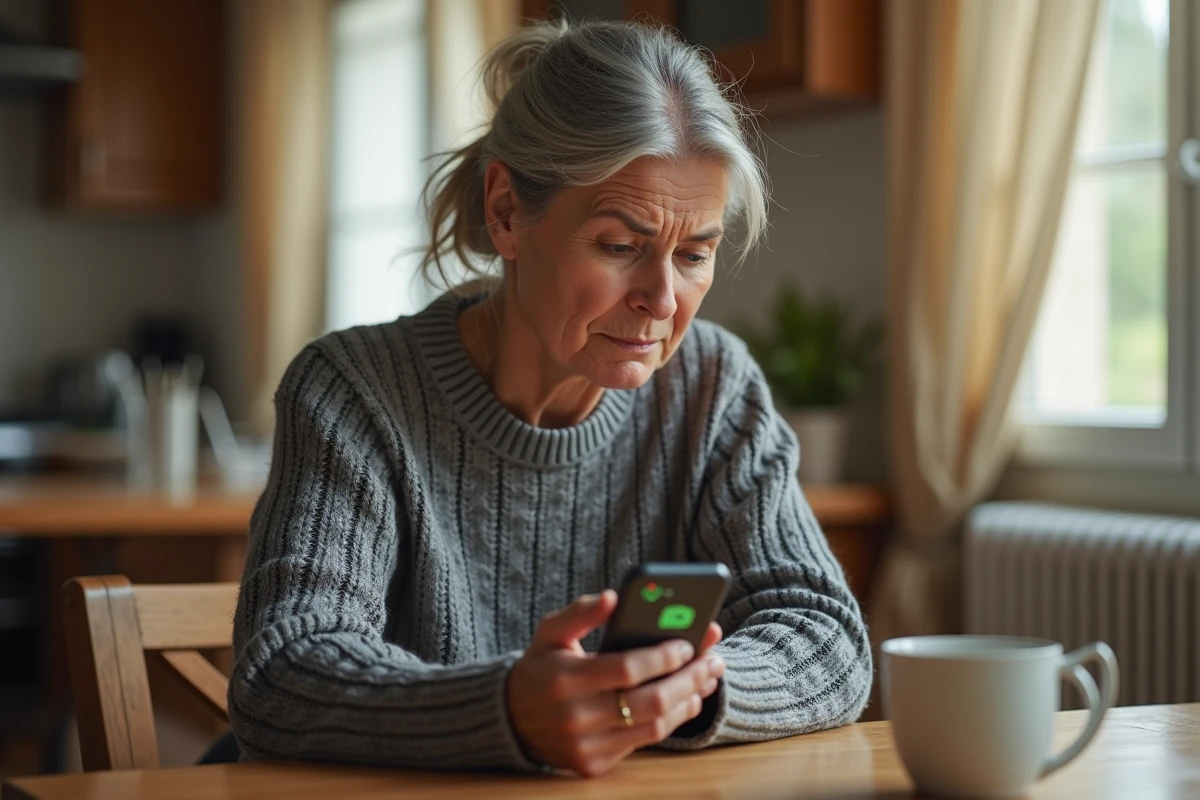
A number starting with 05 inspires confidence: it evokes Bordeaux, Toulouse, Pau, or Montpellier. This association between geographic area code and local call has become a lever exploited by prospecting and fraud structures.
Since VoIP allows call centers located abroad to use 05 ranges delegated by international operators, the rule “05 = local call therefore reliable” no longer holds. Understanding the mechanisms behind these calls, recent regulatory developments, and concrete warning signals allows for effective filtering of suspicious numbers.
05 Numbers and VoIP: why the geographic code no longer guarantees anything
Arcep modified its national numbering plan at the end of 2025 (decision no. 2025-2106 of December 19, 2025). This text specifies that the geographic use of fixed numbers is no longer guaranteed in the era of voice over IP. International operators can obtain delegations of 05 ranges and assign them to platforms located outside France.
In practice, a call displayed as 05 34 or 05 61 may come from a call center based in North Africa, Eastern Europe, or Southeast Asia. Phone spoofing (falsification of the displayed number) amplifies the problem: the caller chooses the number that appears on your screen, regardless of their actual location.
To better understand the risks of 05 numbers, it is essential to keep in mind that technology has dissociated the area code from the physical location of the caller.
| Criteria | Before VoIP (switched network) | Since VoIP became widespread |
|---|---|---|
| Caller location | Corresponds to the 05 geographic area | Can be anywhere in the world |
| Reliability of the displayed number | High (fixed assignment by the operator) | Variable (delegation of ranges, spoofing possible) |
| Possibility of falsification | Very low | Common via SIP protocols |
| Regulatory framework | Strict numbering plan | Arcep decision 2025-2106: geographic use “not guaranteed” |

Law of June 30, 2025, and phone opt-in: what changes for 05 calls
Law no. 2025-784 of June 30, 2025, published in the Official Journal on July 1, 2025, establishes a major change. As of August 11, 2026, any commercial prospecting call requires prior opt-in from the consumer. This obligation applies to numbers starting with 05 as well as all other area codes.
Article L.223-1 of the Consumer Code, in its version resulting from this law, provides for the automatic nullity of contracts concluded by telephone solicitation without prior consent. An orally signed subscription, a mandate confirmed by phone: any commitment obtained without opt-in will be deemed null and void.
Difference between opt-out and opt-in
Until now, the system relied on opt-out: the consumer had to register on Bloctel to refuse calls. The mechanism is reversing. Without explicit consent from the consumer, commercial calls are prohibited, regardless of the origin of the number.
This shift reduces exposure to phone scams. Fraudulent structures that use 05 numbers to simulate a legitimate local call lose a credibility argument: if you have not given any consent, the call is by definition non-compliant.
Concrete warning signals for a suspicious 05 call
Not all calls starting with 05 are fraudulent. Your doctor, your town hall, or your regional bank use this same area code. The difficulty lies in sorting. Several signals allow you to distinguish a legitimate call from a scam attempt.
- The call is silent for several seconds before a speaker takes the floor: this is a sign of an automated system distributing answered calls to available agents (predictive dialer).
- The speaker asks you to call another number, often starting with 089 or 08: this is a referral to a premium rate number disguised as customer service or administration.
- A text message received from a 05 number invites you to click on a link to “confirm a package” or “update your banking details”: this is smishing, the SMS version of phishing.
- The caller pressures you to provide personal data (card number, bank identifier, code received by SMS) under the pretext of urgency.
The website economie.gouv.fr reminds us that administrations and banks never ask for sensitive data by phone. If in doubt, hang up and call the organization yourself using the number listed on your statements or official letters.

Blocking tools and reporting fraudulent 05 numbers
Blocking a number after a suspicious call remains the first line of defense. Android and iOS smartphones include a native blocking feature accessible from the call log. Some third-party applications enhance this protection by cross-referencing community reports to identify numbers reported as fraudulent.
Report a number to 33700
The 33700 system allows you to transfer the suspicious number via SMS. This service, managed in partnership with telephone operators, feeds a database that helps cut off lines used for fraudulent campaigns.
Bloctel remains relevant for limiting legal commercial solicitation but has no effect on fraudulent calls which, by definition, do not comply with regulations. The two systems are complementary: Bloctel filters legitimate prospecting, while 33700 targets illicit calls.
- Block the number directly on your phone to avoid callbacks.
- Report to 33700 via SMS to feed the national database.
- Verify the number via the reverse directory provided by the Ministry of Economy’s website before calling back.
The combination of mandatory opt-in starting August 11, 2026, strengthened Arcep controls on 05 range delegations, and existing reporting tools creates a more protective framework. Any commercial 05 call received without prior consent will be legally contestable, and any contract potentially signed will be deemed null and void. The reflex to adopt remains simple: never communicate sensitive data by phone and systematically report suspicious numbers.