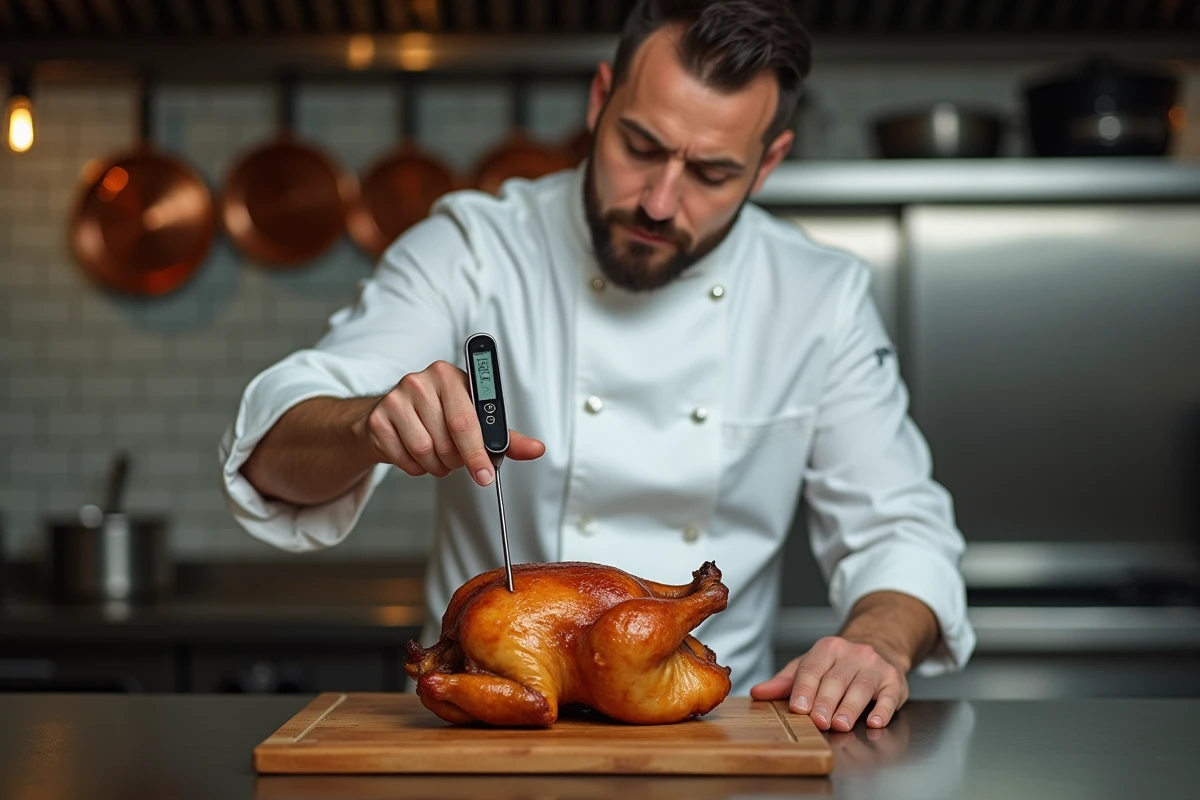
The measurement of temperature in food does not boil down to the choice of a thermometer. The difference between a reliable reading and a false one often lies in the insertion method, the positioning of the probe, and the frequency of calibration. Here, we detail the technical points that determine actual precision in the field.
Multi-point measurement: why a single probe is not enough
On a roast, a tray dish, or a large fish, the peripheral temperature may be compliant while the core remains out of range. Several major French retail chains have implemented multi-point verification protocols since 2023, with core probes positioned at different locations within the same product. The discrepancies observed between the periphery and the center can sometimes be significant, even when the cold display shows a correct temperature.
This finding changes the game for any professional who relies on a single reading. A single measurement point does not guarantee core compliance, especially for large or irregularly shaped foods. We recommend inserting the probe at least two distinct depths and retaining the highest value.
The choice of a detectable metal for food temperature meets this reliability requirement, particularly in production environments subject to strict HACCP constraints where each probe must be traceable in case of breakage.
Calibration of food thermometers: regulatory framework and frequency
Since the entry into force of Regulation (EU) 2021/382, which amends the annex of Regulation (EC) No 852/2004, the European Commission emphasizes the validation and verification of temperature measuring instruments within the framework of good hygiene practices and HACCP. This obligation is pushing more and more operators to have their thermometers calibrated at least once a year by an accredited laboratory.
Calibration does not correct a faulty device. It quantifies the discrepancy between the displayed value and the reference value, then generates a certificate that documents this drift. If the discrepancy exceeds the tolerance defined in your HACCP plan, the thermometer is removed from use.
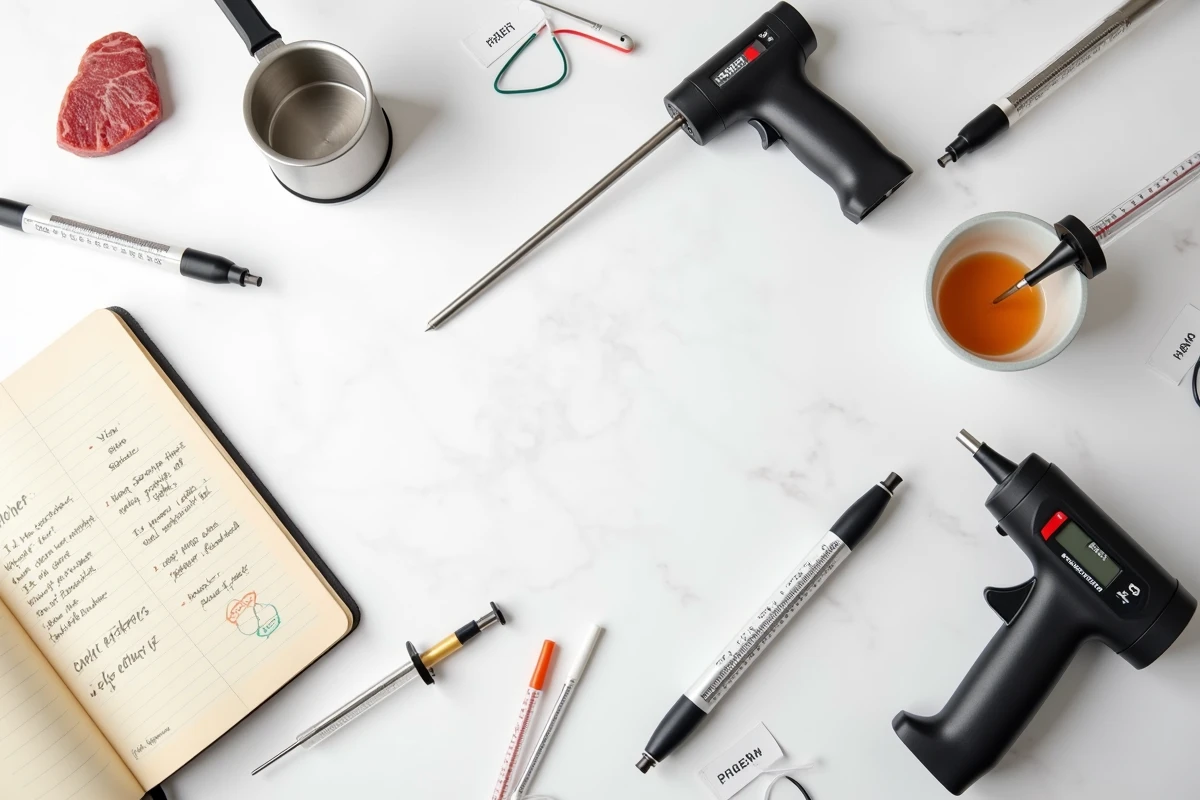
In practice, two simple intermediate verification methods can be implemented between two formal calibrations:
- The melting ice bath (water-crushed ice mixture saturated): the probe should display a value close to 0 °C. A deviation greater than the manufacturer’s tolerance indicates a drift.
- The boiling point of water (adjusted to the site’s altitude): less precise in practice, but useful for checking the linearity of the sensor at the high end of the scale.
- The cross-comparison with a certified reference thermometer, directly in the product or simulated bath: this is the most reliable method outside the laboratory.
These verifications take a few minutes and allow for the detection of a drift before it skews a critical reading during receiving or storage.
Core probe or infrared: criteria for choice in catering
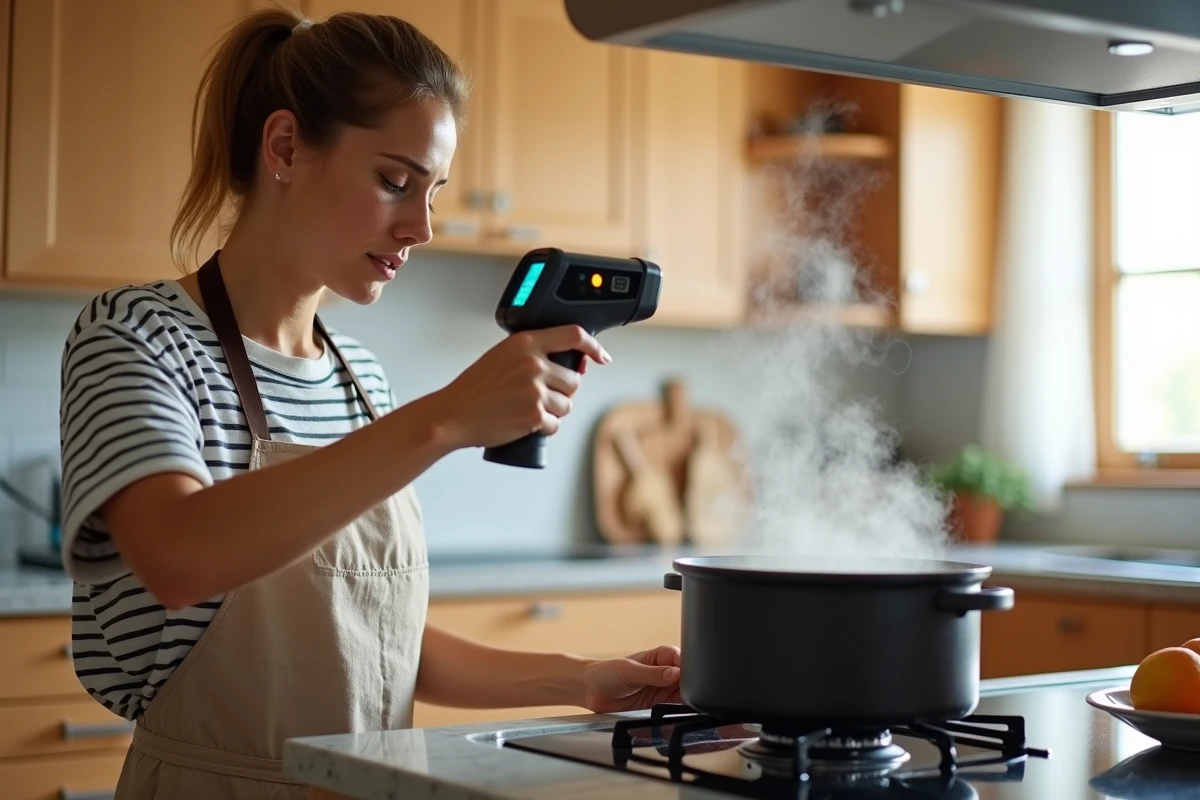
Infrared measures surface temperature, never core temperature. This distinction remains the most frequent source of error noted during health audits in France, particularly in small establishments like food trucks, caterers, or gourmet shops. The main error is not the absence of a thermometer, but the measurement at the surface instead of at the core.
The infrared thermometer has its place in a rapid non-invasive control protocol: checking the surface temperature of a cold display, a delivery cart, or packaging upon receipt. It avoids direct contact and preserves the integrity of the packaging.
The probe remains the only reliable method to validate the internal temperature of cooked, cooled, or reheated food. The insertion must reach the coldest point of the product, usually the geometric center, avoiding contact with the bone or the container wall that would skew the reading.
Precision and response time of digital probes
Not all probes are created equal. Two technical parameters determine the reliability of a measurement in catering:
- The stated accuracy: a probe displaying +/- 0.5 °C covers the majority of uses in cooking and storage. Models with +/- 1 °C remain acceptable for receiving control but become insufficient for low-temperature cooking monitoring.
- The response time: a slow probe (taking several seconds to stabilize) encourages the operator to remove it too early and note an intermediate value. K-type thermocouple probes offer a shorter response time than standard NTC probes.
- The diameter of the tip: a fine tip (less than 2 mm) limits the size of the hole in the food, reducing cross-contamination and juice loss on meat cuts.
Rapid cooling: the measurement that secures the cold chain
Cooling is the phase where the microbiological risk is highest, as the food passes through the temperature range favorable to bacterial proliferation. Measuring the temperature only at the beginning and end of the cooling cycle is not enough to prove compliance.
We observe that the most robust protocols incorporate a temperature data logger with a probe, positioned at the core of the largest product in the batch. Continuous recording documents the descent curve and allows verification that the critical zone was traversed within the required time frame.
This type of automated traceability effectively replaces manual readings, which are often incomplete or filled out retrospectively. In the event of a health inspection, the time-stamped curve constitutes far stronger evidence than a hand-filled table.
The accuracy of temperature measurement in food relies less on the sophistication of the equipment than on the rigor of the protocol. A properly calibrated probe, positioned correctly, and used with sufficient stabilization time yields reliable results, regardless of the production or catering context.