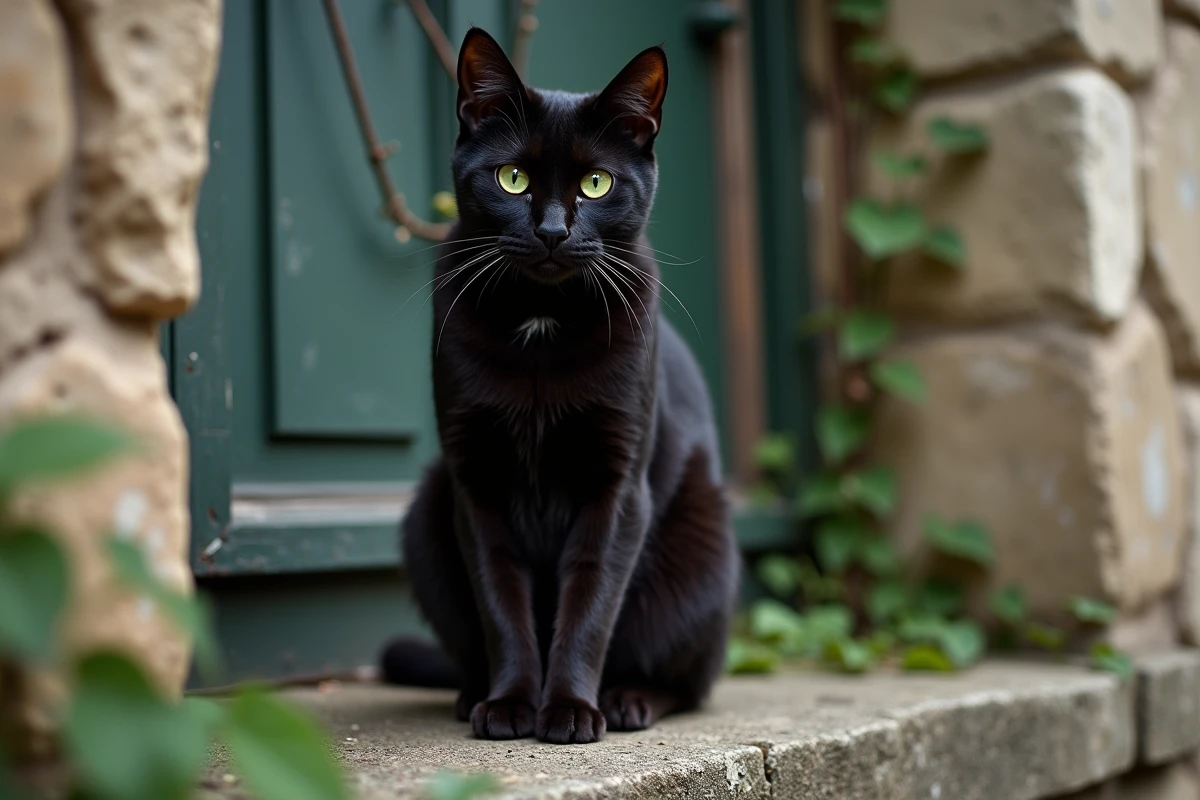
The combination of black fur and green eyes in cats results from specific biological mechanisms, often confused with the symbolic interpretations surrounding these animals. Distinguishing what pertains to genetics from what belongs to cultural narratives helps to understand why this feline fascinates so much, and why beliefs about it vary from continent to continent.
Melanin and iris pigmentation: why some black cats have green eyes
The black coat of the cat comes from a high concentration of eumelanin in the fur. This pigment, produced by melanocytes, absorbs almost the entire light spectrum, giving it that deep and uniform hue.
The color of the eyes follows a distinct process. The cat’s iris does not contain green pigment. The perceived hue results from a moderate amount of melanin in the stroma of the iris, combined with the diffusion of light through collagen fibers. With little melanin, the iris appears blue or green. With more, it turns copper or amber.
A black cat with green eyes thus carries two independent genetic traits: a coat saturated with eumelanin and a lightly pigmented iris. This association is not rare, but it creates a striking visual contrast that has long fueled popular narratives. To better understand the meaning of the black cat with green eyes, it is essential to separate this biological mechanism from symbolic projections.
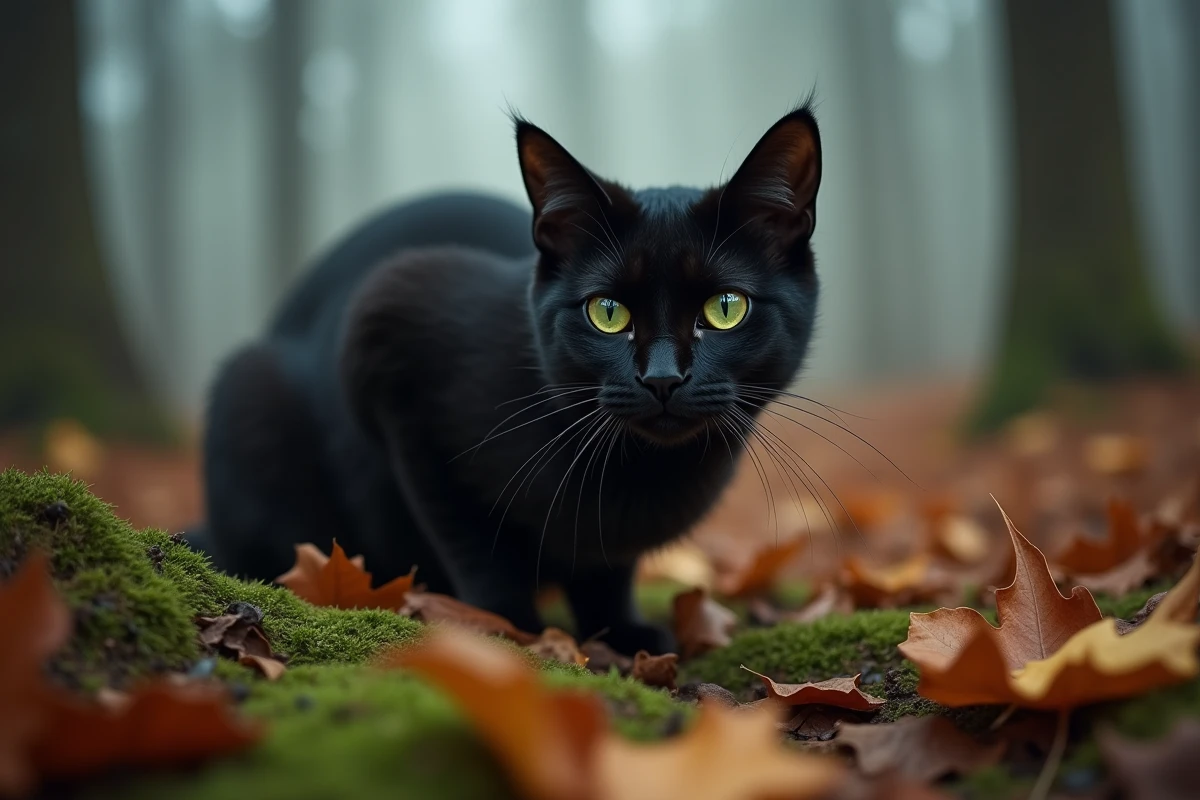
Black cats and superstitions: a geographical variability often overlooked
Online content often attributes a unique meaning to the black cat, sometimes seen as a good omen, sometimes as a bad one. The reality is more fragmented. Beliefs change radically from country to country, and sometimes from region to region within the same country.
Black felines revered or feared depending on cultures
In ancient Egypt, black cats were sacred. The goddess Bastet, represented in feline form, symbolized the protection of the home and fertility. Harming a cat was a severely punished crime.
In Japan, the black cat is associated with good luck, particularly for single women. The Maneki-neko, this figurine of a cat raising its paw, exists in a black version to ward off bad luck.
In Western Europe, the trajectory is the opposite. In the Middle Ages, the black cat was associated with witchcraft, leading to massive persecutions of felines. In the UK, the perception later reversed: crossing paths with a black cat is still seen as a favorable sign.
- Ancient Egypt: sacred animal linked to the goddess Bastet, protected by law
- Japan: symbol of luck, present in folklore as protective figurines
- Medieval Europe: association with witchcraft, documented persecutions
- UK: sign of good fortune, perception opposite to the rest of continental Europe
This mosaic of beliefs shows that there is no universal meaning of the black cat. The color of the eyes does not play a role in these traditions: popular narratives focus on the fur, not the iris.
Green eyes of the cat: symbolic interpretation or simple genetics
Attributing a mystical meaning to a cat’s green eyes stems from a frequent confusion between aesthetics and symbolism. No documented ancient tradition distinguishes a black cat with green eyes from a black cat with amber eyes in terms of omen or power.
The association between green eyes and mystery comes mainly from contemporary visual culture. Cinema, photography, and social media exploit this black-green contrast because it produces spectacular images. The “mystery” attributed to green eyes is a visual effect, not an ancient cultural heritage.
This distinction has a practical consequence. Seeking a deep meaning in the color of a cat’s iris amounts to projecting an intention onto the animal that exists only in the human gaze. Feline genetics produces various color combinations without any symbolic hierarchy among them.
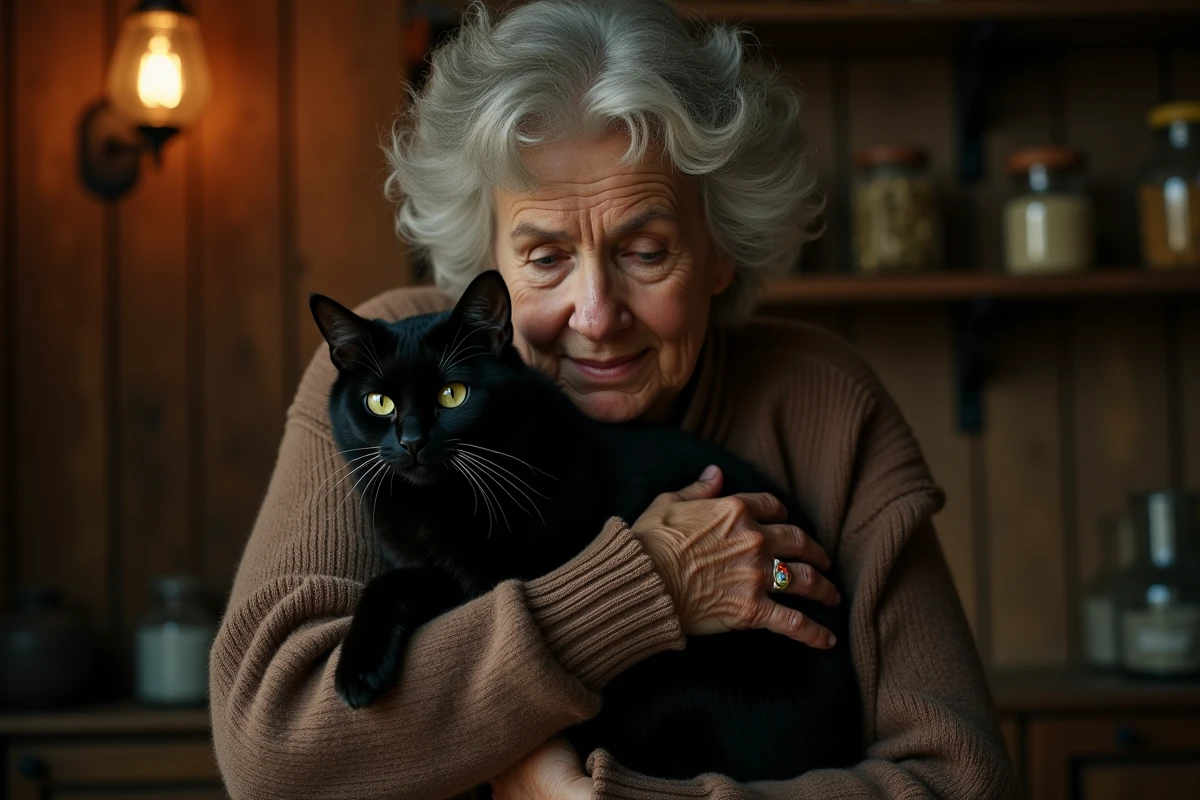
Adoption of black cats: the concrete impact of superstitions in shelters
Beliefs surrounding the black cat are not abstract. They have a measurable effect in animal shelters. Black cats are among the animals that wait the longest to be adopted.
Several factors accumulate:
- Persistent superstitions deter some potential adopters
- In advertisement photos, black fur makes facial features less readable, reducing online visual appeal
- The overrepresentation of black cats in litters amplifies the imbalance between supply and demand in shelters
The main barrier to adoption remains the negative cultural perception, not a behavioral or health issue. A black cat with green eyes has no temperament peculiarities related to its appearance. Animal protection associations regularly remind that the color of the fur does not predict the character or health of a feline.
Photogenicity and social media: a recent lever
Social media have partially reversed the trend. Accounts dedicated to black cats with green eyes gather large communities, and this visibility helps to normalize the image of these animals. The photogenicity that previously hindered them in shelter advertisements becomes an asset on visual platforms.
The meaning of the black cat with green eyes, as it circulates today, owes more to image algorithms than to medieval grimoires. Shelters that care for the photographic staging of their black residents see an improvement in adoption rates, confirming that the issue was primarily a matter of visual representation.