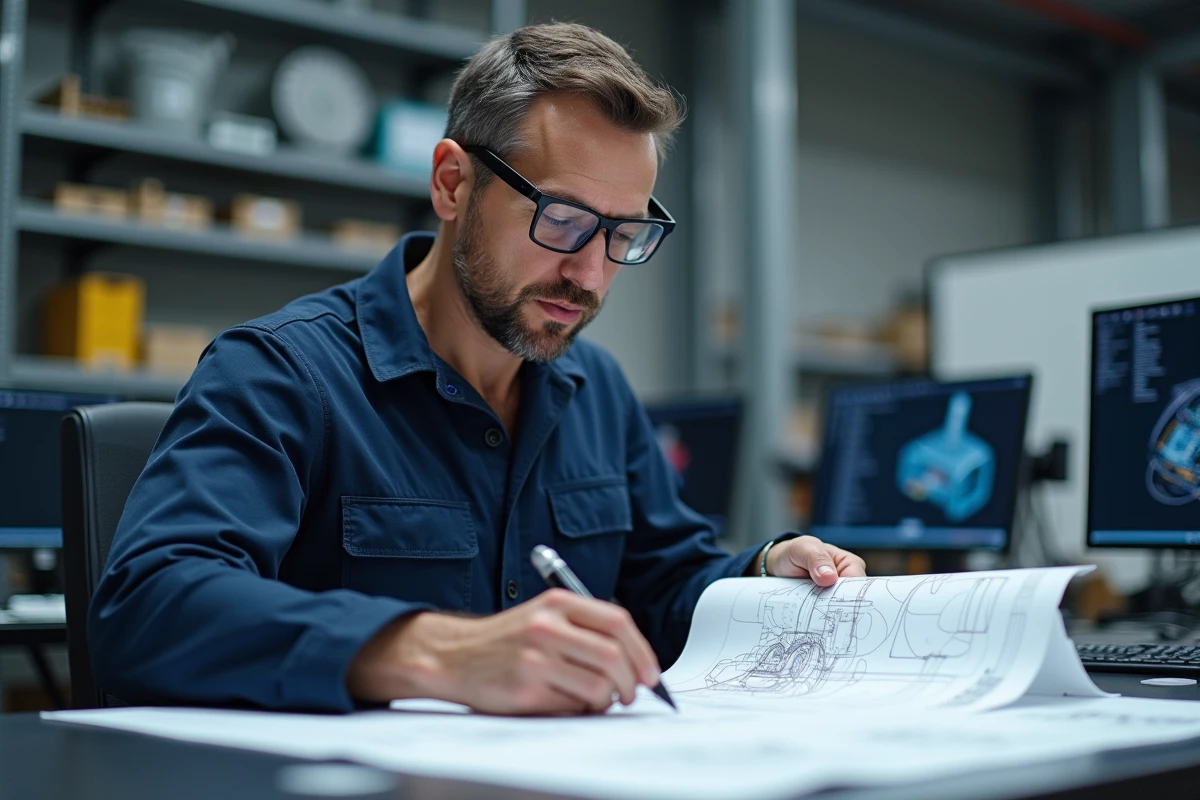
A poorly defined specifications document does not just cause a minor setback: it triggers a cascade of additional costs, imposes last-minute changes, and sows discord among partners. Forgetting machining tolerances from the design phase means accepting that the entire production chain risks being unbalanced, ultimately resulting in a lackluster final performance for the equipment.
In the industry, when coordination fails between design offices, manufacturing workshops, and subcontractors, mechanical projects quickly take on water. Certain steps, often neglected or overlooked, leave lasting marks: even a massive deployment of resources is not always enough to repair the damage.
Understanding the stakes of industrial machine design today
The design and manufacturing of industrial machines today concentrates a host of unprecedented requirements for the French industry. Cutting-edge engineering, enhanced safety, evolving regulations, advanced automation, technical creativity: each field demands high-level skills. Behind every custom machine lies the challenge of a sector: food processing, pharmaceuticals, automotive, electronics, or cosmetics, all dictate their own rules. Responding to this diversity requires a fine understanding of the production process, as well as the ability to anticipate environmental constraints and regulatory obligations.
Automation disrupts the benchmarks of industrial design. It allows for refined control of operations, reliable results, and increased pace. Safety and occupational health imperatives come into play from the outset: it is impossible to overlook the ISO 12100 standard, the backbone of compliance in France. At every phase, a strict technical framework delineates the field.
Now, quality, productivity, and compliance go hand in hand with ecological ambitions and overall performance criteria. Innovation is no longer limited to pure mechanics: it aims at reducing environmental impact, simplifying maintenance, ensuring traceability, and optimizing energy use. In this context, the design and manufacturing of industrial machines play a significant role in a company’s strategy: it shapes its competitiveness, secures its production lines, and embeds its investments for the long term.
What are the essential steps to go from idea to manufacturing?
Transforming an idea into a machine industrial involves a collective craftsmanship where each step determines the fate of the project. It all begins with a precise specifications document: it details the client’s expectations, technical constraints, and safety and compliance obligations. A true foundation of the project, it serves as a guide for engineers and technicians throughout the process.
After this foundation, the feasibility study comes into play. Its objective: to verify the technical, economic, and regulatory viability of the proposed solution. It allows for validating design choices, anticipating obstacles, and estimating the resources to be mobilized. Taking the time for this step limits unpleasant surprises, controls costs, and establishes a solid timeline.
The project takes shape during the prototyping phase. Here, a functional model, a mock-up, or a pilot is created, subjected to a series of tests and adjustments. Theory meets reality: teams observe, correct, and repeat until the solution meets satisfaction. This is the ideal ground to identify weaknesses, refine settings, and ensure that the machine will deliver on its promises.
Next comes the stage of industrialization and manufacturing. Assembly and adjustments follow in sequence, each operation being subjected to demanding quality controls. Machining and automation specialists take turns in the workshop to bring the machine to life, piece by piece. The on-site installation marks the beginning of compliance and safety testing: nothing is left to chance. The commissioning includes training and tailored support: passing on the right gestures to operators strengthens the robustness of the investment.
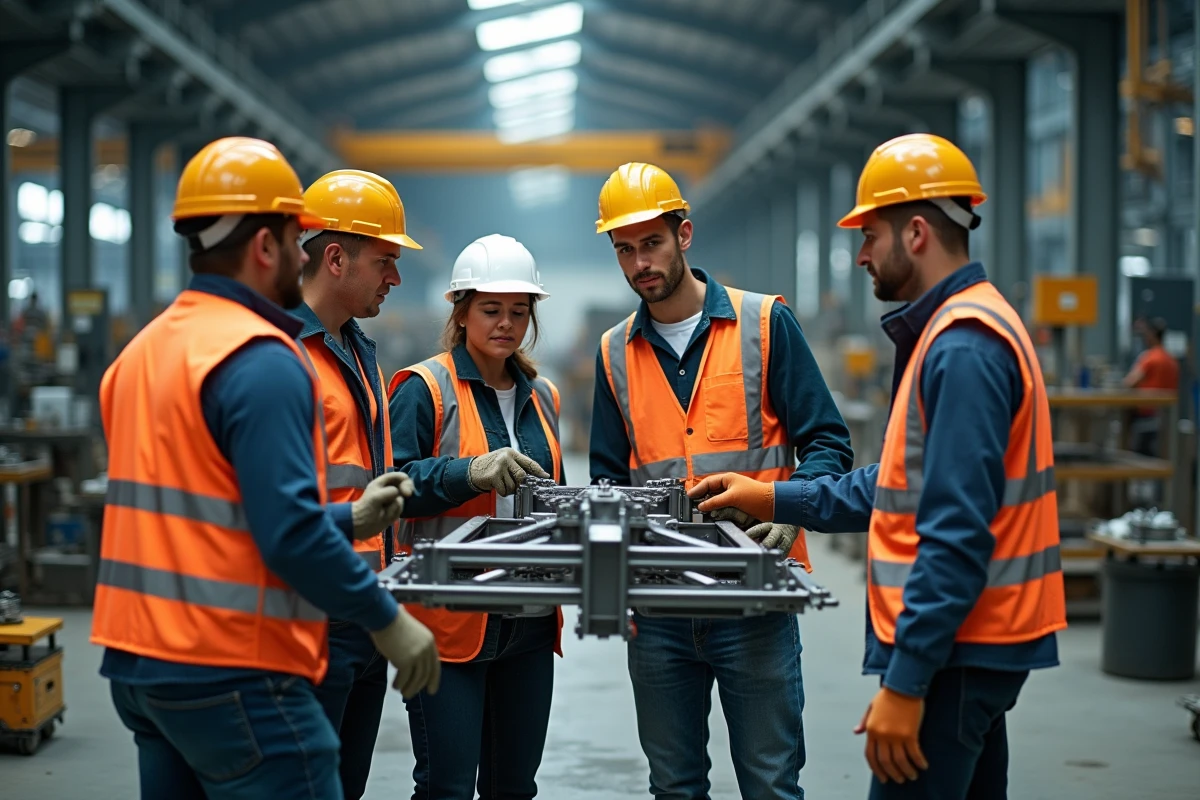
Focus on methods and tools to optimize each phase of the industrial process
To improve all links in the chain, planning remains the starting lever: it articulates each step, from procurement to final delivery. Precise tracking of deadlines, fine management of resources: the organization leaves no room for improvisation. ERP systems orchestrate planning, while MES solutions allow for real-time production tracking, connecting the design office to the workshop in a single flow of information.
Advances in robotics and additive manufacturing change the game. Robots and cobots automate repetitive or dangerous tasks, secure workstations, and ensure reliable production. 3D printing, for its part, accelerates the creation of complex parts, reduces material waste, and facilitates rapid iterations during prototyping.
Quality control relies on connected tools: smart sensors, statistical analyses, rigorous traceability. Low-code platforms, like Softyflow, digitize workflows, streamline information flow, and feed continuous improvement. Failure mode analysis guides prevention, while preventive maintenance and retrofit extend the lifespan of machines while integrating an environmental dimension.
Here are the main families of tools and methods that structure the optimization of the process:
- Planning: anticipation, resource allocation, priority management.
- Automation: robotics, 3D printing, cycle time reduction.
- Quality control: traceability, measurement, correction of deviations.
- Maintenance: preventive maintenance, retrofit, environmental optimization.
Successfully designing and manufacturing an industrial machine means aligning technical rigor, innovation capacity, and a sense of teamwork. Those who manage to orchestrate these steps transform their production lines and gain a head start, where mechanics, humans, and digital technology finally agree on the same score.