
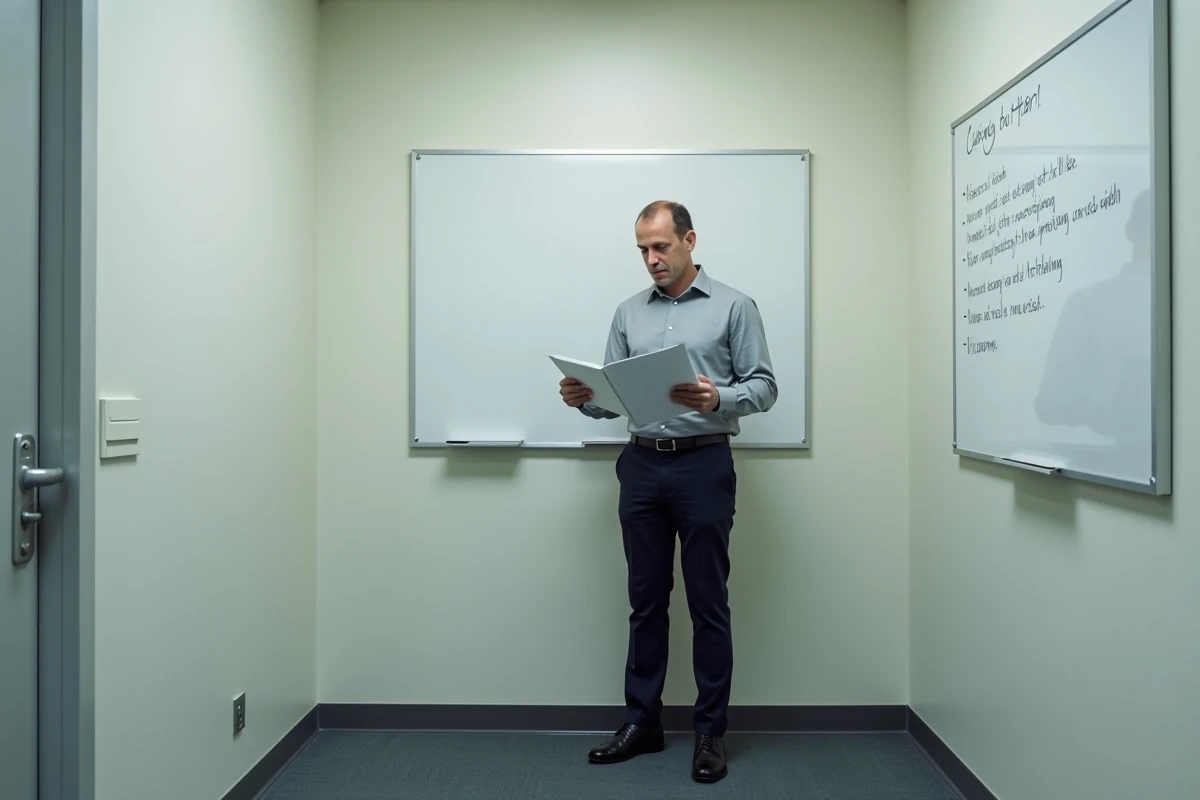
In the corridors of companies, there are offices where daylight never enters. No, this is not an urban legend or a quirk reserved for dusty archives. This reality raises a simple and direct question: do we really have the right to work in a windowless room? The French Labor Code requires that any space intended for work must have sufficient natural lighting, unless there is a duly justified technical impossibility. Yet, “blind” offices persist in many companies, sometimes validated by a prefectural exemption.
It is difficult to circumvent the strictness of the regulations: placing employees in a windowless office is only permitted in very specific cases. Some buildings are too old, sometimes located in basements, or their structure severely complicates the addition of openings. The employer can only bypass the rules if a specific prefectural exemption authorizes it, following a well-defined procedure.
Windowless Workspaces: What the Law and French Regulations Provide
The Labor Code gets straight to the point: every workspace must benefit from a source of natural light. Behind this requirement lies an obvious goal of protecting the health, comfort, and safety of workers. However, when it becomes impossible to meet this obligation for objective reasons, the employer must initiate an official, documented, and transparent process.
Before considering such an exemption, the law requires consultation with the social and economic committee (CSE) as well as the occupational health service. Their opinion is not merely formal. They ensure that the nature of the activity can withstand the absence of external light, and that measures genuinely compensate for the lack. The unique document for assessing professional risks must list these “blind” spaces and demonstrate adequate artificial lighting; otherwise, the justice system could reject the arrangement.
For those who want to verify, the dedicated page on the legality of windowless workspaces perfectly summarizes the obligations and safeguards surrounding this sensitive issue.
Beyond the texts, common sense also plays a role: conditions for interior layout, optimized ventilation, and limiting time spent in these offices. Each solution requires reflection and regular improvement to avoid sacrificing quality of life at work under the pretext of technical constraints.
What Risks for the Health and Well-being of Employees in a Windowless Office?
Artificial light spots are not enough to dissipate health risks. Occupational doctors and researchers agree: living and working without exposure to daylight is not trivial. This absence disrupts the circadian rhythm, the internal clock of our body that regulates sleep, energy, and attention. Persistent fatigue, mood and sleep disorders, difficulty concentrating, irritability: there is nothing exaggerated in this observation, as symptoms accumulate for many affected employees.
Consequences on Physical and Mental Health
To summarize the main dangers, here is what specialists highlight:
- Vitamin D deficiency: insufficient exposure to natural light reduces the body’s ability to produce this vitamin, which is essential for the skeleton and immune defense.
- Risk of stress and feelings of isolation: the absence of openings heightens the disconnection from the outside, which fosters anxiety and a sense of withdrawal.
- Musculoskeletal disorders and visual fatigue: poor quality artificial lighting leads to eye discomfort and bodily tension, exacerbated by the lack of temporal references.
Over time, the internal climate can become tense. Isolation, fatigue, and sometimes even deterioration of collective relationships push some employees to the brink of exhaustion. This is not trivial: several social and economic committees alert on the link between prolonged practices of windowless spaces and well-being issues that can lead to presumed moral harassment in extreme cases.
Concrete Solutions to Make These Spaces More Suitable and Compliant
However, there are ways to mitigate the inconveniences of a windowless office. The employer remains obliged to ensure the protection of employees, which means acting on several fronts; there is no question of sticking to the legal minimum. First, invest in intelligent, adjustable, and biologically respectful artificial lighting: appropriate color temperature, variable intensity according to the time of day, anti-glare devices.
Ventilation must receive the same rigorous attention. An efficient air renewal system, perhaps enhanced by sensors, helps avoid CO₂ stagnation and the resulting decrease in alertness. Some more creative arrangements are also gaining ground: luminous ceilings simulating the sky, screens displaying outdoor images, green walls, or natural materials to break the monotony.
To go further, obtaining certifications such as HQE, BREEAM, or LEED prompts the entire company to reconsider the allocation of windowless spaces, in continuous dialogue with the CSE and occupational health services. Feeding and updating the unique document on professional risks then becomes a lever to test, adjust, and continuously improve the daily experience based on the concrete experiences of the staff.
Natural light will always have an edge over its artificial substitute. But every concrete action, every intelligent adaptation, gives a bit of air and perspective back to those deprived of windows by architecture.