When encountering the expression “Bourzeix runes” while searching for information on the runic alphabet, confusion can arise quickly. The term combines a French surname with a writing system that is nearly two millennia old. Understanding this intersection requires going back to the foundations of runic writing, its internal logic, and the reasons why certain contemporary names are associated with it.
Runic Alphabet and the Root of the Word Rune: What the Futhark Really Encodes
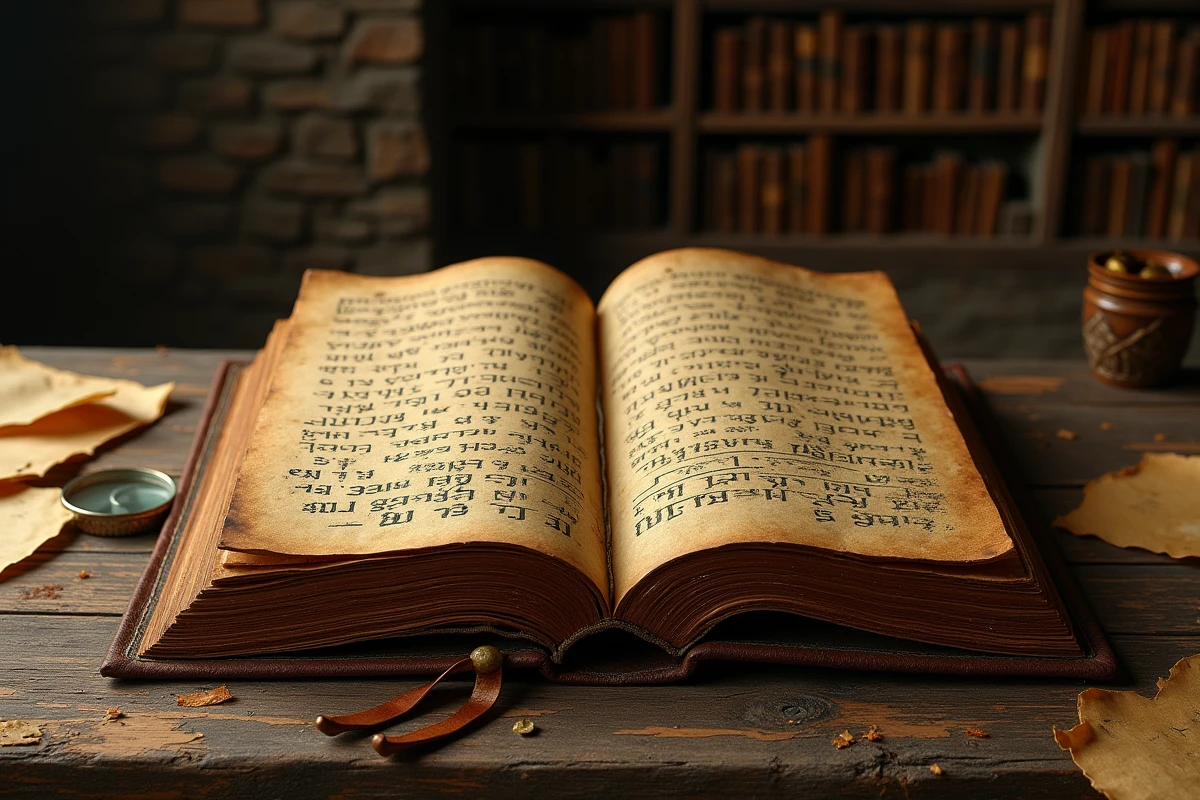
The word “rune” comes from a Germanic root, rūno-, which means “secret” or “magic”. This root can be found in Old Norse (rún, secret or whisper), Old English (rūn, mystery), and Old High German (rūna, confidence or incantation). Celtic languages share this root with a similar meaning: in Old Irish, rún also denotes a secret.
The oldest runic alphabet, the Futhark, derives its name from the contraction of its first six letters. It is not a mystical code at its origin: it is a phonetic writing system used to transcribe Germanic languages. The oldest inscriptions appear around the 2nd century CE, carved on stones, jewelry, or weapons.
When one wants to learn more about the Bourzeix runes, it becomes clear that the association between a surname and the runic alphabet often involves a process of transposition: converting a modern name into runic characters, letter by letter, using the Futhark as a correspondence grid.
Transposing a Name into Runes: Method and Common Pitfalls
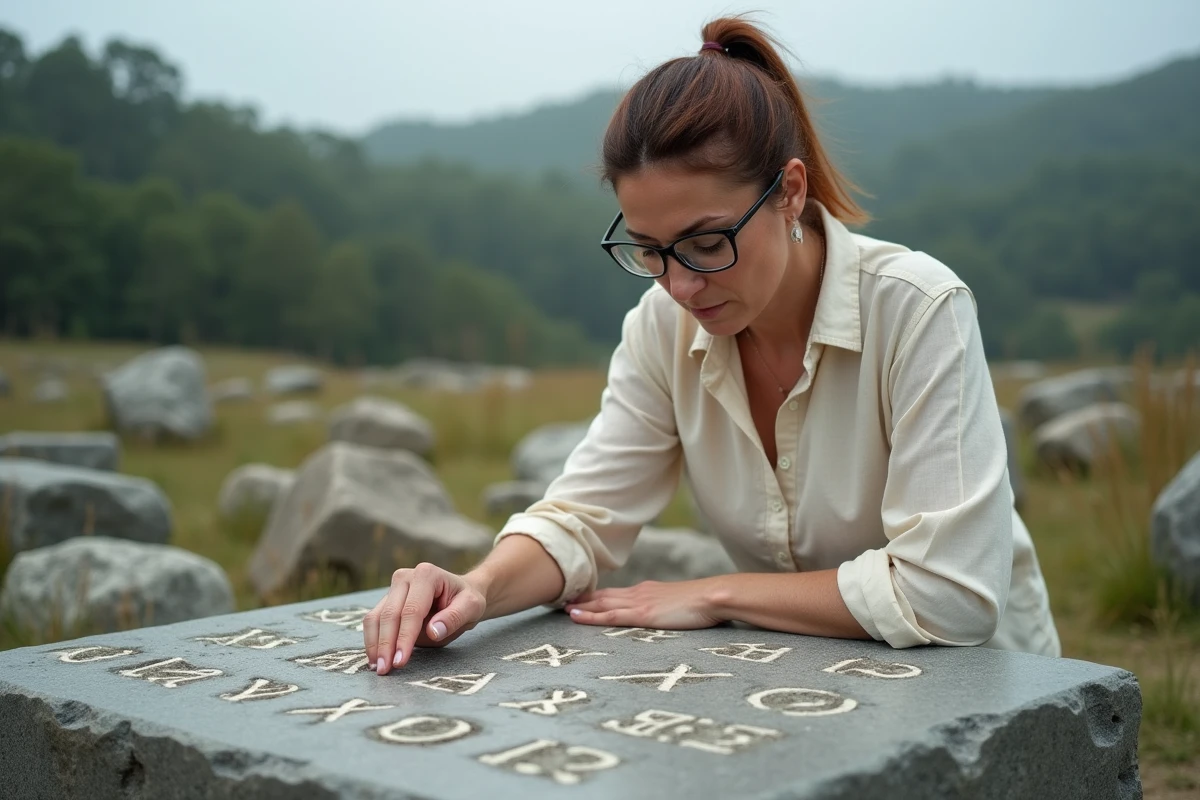
Converting a name like Bourzeix into runes is not just about replacing each Latin letter with a symbol. The ancient Futhark consists of about twenty signs, and some Latin letters have no direct equivalent.
The final “z” of Bourzeix, for example, corresponds in the ancient Futhark to the Algiz rune, associated with protection. The “x” presents another problem: there is no single rune for this sound. One must then combine two signs (Kenaz for the “k” and Sowilo or a similar sign for the “s”).
Constraints That Online Correspondence Tables Do Not Show
- The ancient Futhark and the recent Futhark (known as “younger”) do not have the same number of signs. A transposition made with one yields a different result than with the other.
- Nasal vowels or diphthongs in French do not exist in ancient Germanic languages. The “ou” in Bourzeix requires a choice: to use Uruz (its “u”) or to attempt a combination that remains approximate.
- The orientation of the runes can vary according to the reading tradition. Carving a rune upside down potentially changes its meaning in a divinatory context, adding a layer of interpretation absent from simple transliteration.
Feedback varies on this point: some practitioners consider letter-by-letter transposition sufficient, while others believe it is necessary to adapt phonetically by taking the dominant sound of each syllable rather than each isolated letter.
Symbolic Meaning of Runes in a Transcribed Name
Once the name is converted, each rune carries its own meaning. This is where the approach shifts from simple writing to symbolic interpretation, akin to Nordic divination.
Let’s take the most identifiable runes in a transposition of “Bourzeix”:
Berkana (B) refers to the birch, to growth, to renewal. Uruz (U/OU) evokes brute strength, endurance. Raido (R) symbolizes travel and movement. Algiz (Z), mentioned earlier, is linked to protection and connection with the sacred.
This breakdown rune by rune produces a sort of symbolic portrait of the name. In divination practice, one never reads a rune in isolation: it is the combination of symbols that constructs the meaning. Berkana followed by Uruz, for example, suggests a developing strength, not simply “birch + auroch”.
Runes and Nordic Divination: What Laguz and the Draw Bring to the Topic
The Laguz rune, often associated with water and intuition, frequently appears in research related to runes. It does not appear in the direct transposition of Bourzeix, but it illustrates a central principle of runic practice: each symbol functions as a condensation of concepts, not as a neutral letter.
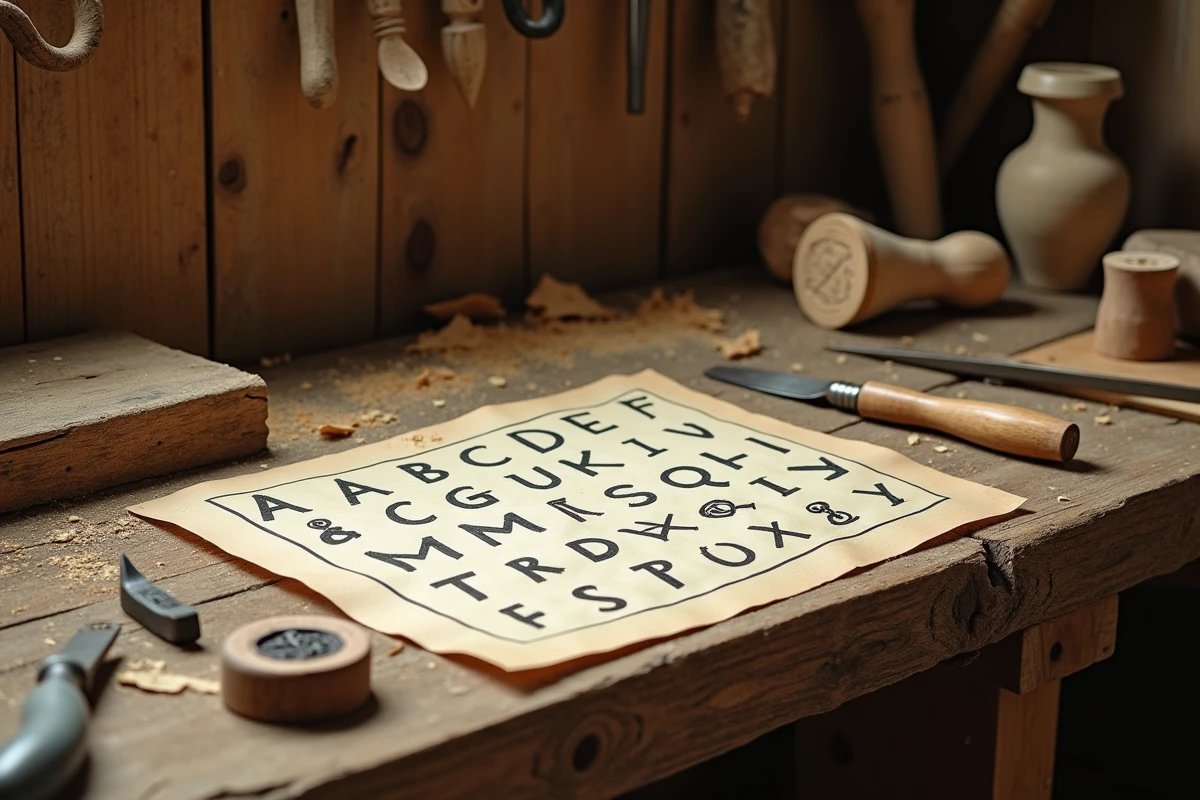
In divinatory drawing, runes are carved on pebbles, wooden tablets, or tokens, and then drawn at random. Three modes of drawing dominate:
- The single rune draw, for a simple question or daily guidance.
- The three rune draw (past, present, future), the most common in everyday practice.
- Complex draws, which sometimes borrow their structure from tarot spreads.
The reversed rune (drawn upside down) alters the reading. Laguz reversed, for example, shifts from fluid intuition to emotional confusion. Not all runes allow for inversion: those whose shape is vertically symmetrical (like Ingwaz) remain the same in both directions.
Ancient Futhark or Recent Futhark: Which Alphabet to Choose for Transcribing a Name
The ancient Futhark has more signs than the recent Futhark, making it more suitable for transposing names from modern languages. The recent Futhark, used during the Viking Age, has reduced the number of characters, which forces the merging of several sounds under one sign.
To transcribe a French name, the ancient Futhark offers more phonetic precision. The Anglo-Saxon Futhorc, which adds additional runes to cover sounds absent from continental Germanic, is sometimes a better fit for the peculiarities of French.
The association between a surname like Bourzeix and the runic alphabet involves a personal approach, often aesthetic or spiritual. The rigor of the transposition depends on the chosen system and the phonetic coherence applied. Carving one’s name in runes without checking the correspondence between the systems is akin to writing a sentence by mixing two different alphabets.